Something Borrowed, Something Blue, Something Wavy: How Couples Are Reinventing the Wedding Album
Wedding photos used to follow a pretty predictable script. Soft, warm tones. Maybe a little vignette around the edges. A slightly desaturated background to make the couple pop. Safe. Classic. Fine.
But "fine" doesn't exactly cut it when your guests are already posting candid iPhone shots to Instagram before the cake is even cut. Today's couples want their professional gallery to do more than document a day — they want it to feel like something. And increasingly, that feeling is coming from wave effects.
From the Chapel to the Feed
Wedding photographers across the US have started noticing a shift in what couples are actually asking for during consultations. It's not just about golden-hour lighting or a particular film emulation preset anymore. Clients are coming in with mood boards full of images that have a distinct visual energy — flowing, layered, almost liquid in their movement.
"Three years ago, nobody was asking me about wave edits," says one Philadelphia-based wedding photographer who has shot over 200 weddings. "Now I'd say at least one in three couples mentions wanting something that looks more dynamic. They're not always calling it a 'wave effect,' but when they show me reference photos, that's exactly what it is."
The appeal makes a lot of sense when you think about how wedding photos actually live in the world now. They're not just printed and tucked into a leather-bound album on a coffee table. They're shared in Instagram carousels, pinned to Pinterest boards, turned into highlight reels, used as profile photos, and displayed in digital frames. In that environment, a little visual motion — even if it's just implied — catches the eye in a way that a flat, static edit simply can't.
What Wave Edits Actually Do for Wedding Photos
So what does a wave effect look like when applied to a wedding image? It depends on the approach, but the most popular techniques tend to fall into a few categories.
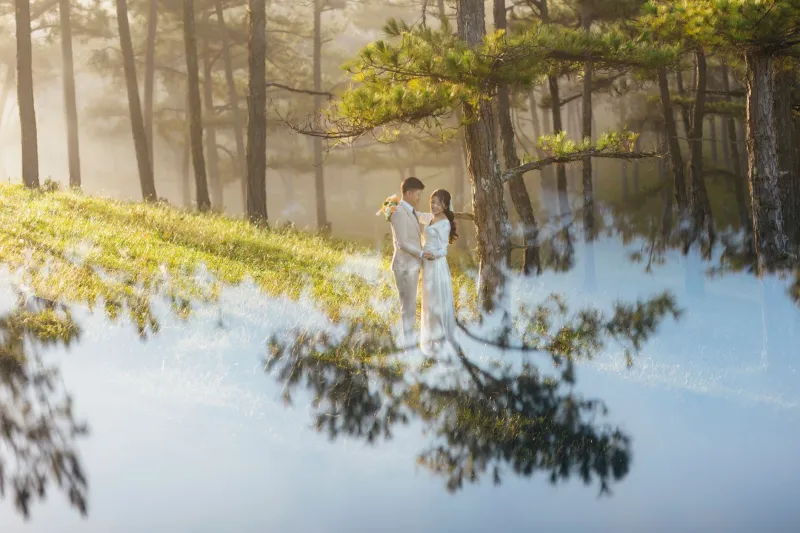
Some photographers use subtle ripple overlays that give portraits a slightly surreal, dreamlike quality — like the image is being viewed through gently moving water. Others lean into color distortion, layering iridescent tones that shift depending on how you're viewing the screen. There's also a growing interest in motion blur-style wave effects that create a sense of flowing movement in otherwise still shots, particularly popular for veil shots, first dances, and any moment where fabric or hair is naturally in motion.
For couples who want something bolder, there are more dramatic wave edits that warp the background slightly while keeping the subjects sharp — a technique that makes the couple feel like they're existing in their own world, separate from everything around them. It's a little editorial, a little fantastical, and honestly? It photographs beautifully.
"The veil shot used to be my safe play — easy, always pretty," says a wedding photographer based in Austin, Texas. "Now I'm adding a wave distortion to the background and suddenly it looks like a magazine cover. Couples absolutely lose their minds over it."
The Couples Driving the Trend
It's not just photographers pushing this aesthetic — couples themselves are arriving with strong opinions about it. A lot of that is driven by what they're seeing on social media, where wedding content creators and influencers have already normalized more stylized, art-directed imagery.
Jessica and Marcus, who got married in Charleston last spring, specifically sought out a photographer who offered wave-style editing as part of their package. "We'd been following this photographer on Instagram for two years before we even got engaged," Jessica says. "Her editing style is what sold us. There's this fluidity to her photos that makes them feel alive. We didn't want our wedding to look like everyone else's."
That desire to stand out is a huge part of what's accelerating this trend. With the sheer volume of wedding content online, couples are increasingly aware that a traditional edit — no matter how technically perfect — risks blending into the background. Wave effects offer a genuine point of differentiation.
The Industry Is Paying Attention
Wedding industry insiders are taking note. Vendors who specialize in wedding albums, printing, and digital display products have started adapting their offerings to accommodate more experimental editing styles. Some online album platforms now specifically support high-resolution exports optimized for wave-edited images, which can sometimes have more complex color data than standard edits.
Wedding blogs and publications have also started featuring more editorially stylized photography, which is quietly shifting what couples consider "normal" for a wedding gallery. When a major wedding media outlet publishes a real wedding feature with wave-distorted portraits as the hero images, it signals to the broader market that this isn't a fringe thing — it's a direction.
"What we're seeing is a maturation of the trend," says one wedding industry consultant based in New York. "It started with a small group of photographers who were pushing creative boundaries, and now it's becoming a genuine expectation for a growing segment of couples. That's how trends become standards."
Keeping It Timeless Without Playing It Safe
One concern that does come up is longevity. Wedding photos are supposed to last a lifetime, and there's a real question about whether a trendy edit will feel dated in ten or twenty years the way, say, over-processed HDR photos from the early 2010s do now.
Photographers who specialize in wave edits tend to address this by keeping the effect intentional and restrained. A dramatic wave distortion applied to every single image in a 500-photo gallery is going to feel exhausting — and yes, probably dated eventually. But a selective approach, where wave effects are applied to specific hero images or styled portrait sessions rather than candid moments, tends to hold up much better over time.
"I think about it like fashion," says the Austin photographer. "A couple might wear something trendy on their wedding day, but the photos still feel timeless because of the emotion in them. The edit is just the frame. If the feeling is real, the photo will always work."
The Takeaway for Couples Planning Right Now
If you're in the middle of planning a wedding and you've been scrolling through photographer portfolios wondering why some galleries just hit differently, there's a decent chance wave editing is part of the answer. It's worth asking potential photographers about their editing style, looking specifically at whether they offer more dynamic post-processing options, and being honest about what kind of visual experience you want your gallery to create.
The wedding album isn't going anywhere. But what goes into it — and how it looks when someone swipes through it at 11pm on their phone — is changing fast. Riding that wave might just be the best decision you make for your big day.