Wave Over It: Why Teens Are Ditching Beauty Filters for Something Way More Real

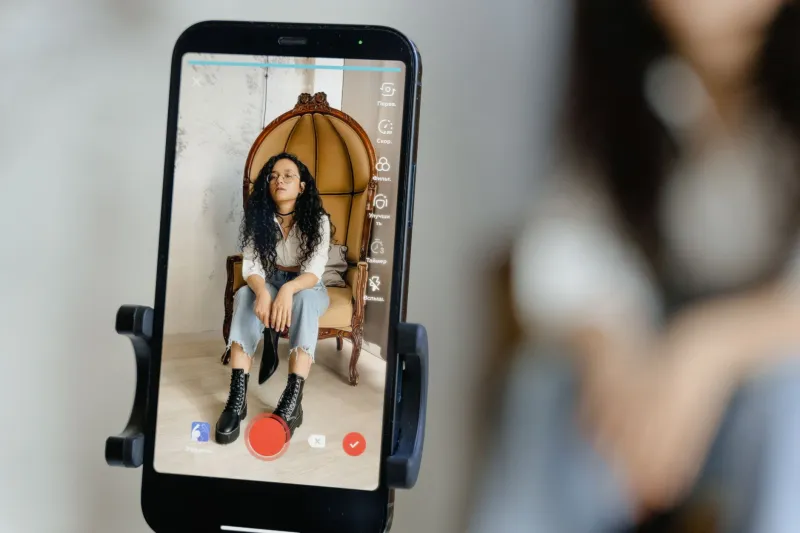
Photo by Photo by Taan Huyn on Unsplash on Unsplash
For a long time, the selfie game had one rulebook: smooth the skin, widen the eyes, maybe shave a little off the jaw. Beauty filters were everywhere, and the pressure to use them was just as pervasive. But scroll through the feeds of teenagers using WaveMyPic today, and something feels noticeably different. The faces are real. The edits are weird — in the best way. And the confidence radiating off those posts? That part's not filtered at all.
The Filter Fatigue Is Real
Ask any teenager who's spent serious time on Instagram or TikTok, and they'll tell you the same thing: the polished-to-perfection look is starting to feel exhausting. Mia, a 16-year-old from Austin, Texas, put it bluntly. "Every time I used a beauty filter, I'd post the photo and then feel weird about it. Like, that's not actually me. And then you start wondering if people even like you or just the filtered version."
She's not alone. A 2023 survey from the American Psychological Association flagged that heavy use of appearance-altering filters is linked to increased body dissatisfaction among teens — particularly girls. The irony is thick: tools designed to make people feel better about how they look were quietly doing the opposite.
Enter wave effects. Instead of trying to "fix" someone's face, they warp the whole image into something abstract, fluid, and unapologetically creative. The focus shifts from how you look to what you made. That's a fundamentally different energy.
Why Distortion Hits Different
There's actual psychology at work here, and it's worth unpacking. When you apply a ripple or wave effect to a photo, you're not asking the image to be more beautiful — you're asking it to be more interesting. Psychologists who study self-presentation online call this a shift from "impression management" to "identity expression," and it turns out that second mode feels a whole lot better for most people.
Jordan, 17, from Portland, Oregon, describes it this way: "With wave edits, my photo becomes kind of like art. It's still me in it, but it's also this whole other thing. People comment on the vibe of it, not on whether my nose looks weird."
That reframing — from subject to creator — is a subtle but powerful psychological move. When you're the artist, the stakes of being judged change completely. You're not presenting your face for approval. You're presenting your vision.
The WaveMyPic Community Is Building Its Own Aesthetic Language
What's especially interesting about the teen wave-editing scene is how collaborative it's become. On WaveMyPic, users share presets, remix each other's styles, and develop mini-trends that ripple outward through their friend groups and beyond. It's less like a beauty competition and more like a shared creative project.
Kayla, 15, from Atlanta, started using WaveMyPic after her older sister showed her how to layer wave effects over candid photos from school events. "Now my whole friend group does it. We'll take the same photo and each do our own wave edit and post them all. It's so fun to see how different they come out."
This kind of collaborative creativity is something traditional beauty filters never really encouraged. Smoothing filters are a solo sport — you apply them privately, maybe feel a little guilty, and post. Wave effects, by contrast, invite experimentation and sharing. They're conversation starters, not confidence patches.
Authenticity, Redefined
Here's where it gets a little philosophical, and honestly, Gen Z is way ahead of older generations on this one. The argument used to be that any filter is inauthentic — that the only "real" photo is an unedited one. But teenagers are pushing back on that binary in a genuinely interesting way.
As Marcus, 18, from Chicago, explained: "Authenticity isn't about showing your literal face with no edits. It's about showing who you actually are. My wave edits show my taste, my mood, my creativity. That's more me than a ring-light selfie with smoothing on it."
That's a pretty sophisticated take, and it aligns with how cultural critics have started thinking about digital identity. Authenticity online isn't about rawness — it's about intentionality. When a teen crafts a wave-edited selfie, they're making deliberate artistic choices. When they slap on a beauty filter, they're often just trying to disappear into a standard.
What This Means for Selfie Culture Going Forward
The shift happening in teen photo culture right now isn't just aesthetic — it's a values shift. The question is no longer "does this make me look good?" but "does this feel like me?" And for a generation that grew up watching Instagram warp beauty standards into something unrecognizable, that pivot toward creative expression over cosmetic correction is, honestly, kind of refreshing.
WaveMyPic has become a space where that shift feels natural. The tools aren't designed to fix anything — they're designed to transform. And for teenagers navigating the chaotic, high-pressure world of social media self-presentation, having a platform that says "make something cool" instead of "look more perfect" turns out to be exactly what a lot of them needed.
So if you haven't seen a wave-edited selfie from a teenager in your life yet, give it a minute. They're coming. And they look like confidence.