Swipe, Wave, Go Viral: The Secret Weapon TikTok Creators Are Hiding in Their Editing Stack
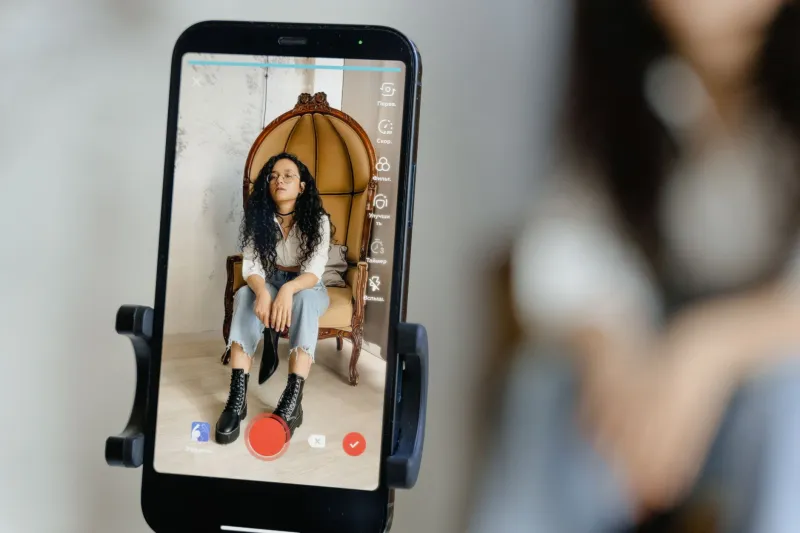
If you've spent any meaningful amount of time on TikTok lately, you've probably noticed something: certain videos just feel different. They pull you in before the creator even opens their mouth. The visuals shimmer, ripple, or pulse in a way that makes your thumb hesitate mid-scroll. That's not an accident. Behind a growing number of those videos is a deliberate, strategic choice to incorporate wave-based photo effects into the content pipeline — and creators who've figured that out are quietly stacking up views while everyone else wonders why their content is flatlining.
We talked to creators, dug into the data, and spent way too many hours scrolling (you know, for research) to figure out exactly what's going on.
The Algorithm Loves Motion — Even in Still Images
Here's something that might surprise you: TikTok's recommendation engine doesn't just reward video movement. It rewards visual complexity — and that includes the kind of layered, dynamic texture that a well-applied wave effect brings to a photo-forward post or a video thumbnail.
Creators who use tools like WaveMyPic to prep their images before dropping them into a Reel or TikTok clip report a noticeable uptick in watch time. The reasoning, according to digital marketing strategist Priya Nolen out of Austin, Texas, is pretty intuitive once you hear it: "When someone sees a still image that looks like it's about to move, their brain stays engaged a half-second longer trying to figure out what it's looking at. That half-second is everything on TikTok."
That half-second is, in platform terms, the difference between a 3-second view and a 10-second view. And watch time percentages are one of the biggest signals TikTok's algorithm uses to decide whether to push your content to the For You Page.
How Creators Are Actually Using Wave Effects
So what does this look like in practice? It varies a lot depending on niche, but a few patterns keep coming up.
The Before/After Reveal: Beauty and fashion creators are using WaveMyPic's wave filters to create a dreamy, distorted "before" image that transitions into a crisp "after" shot. The visual contrast is jarring in the best way — viewers can't help but watch through to the end to see the transformation complete itself.
The Mood Shift: Lifestyle vloggers and travel creators apply wave effects to establish an emotional tone before their video even starts. A sun-drenched beach photo run through a slow-ripple filter signals "vacation content" to the viewer's brain before a single word of voiceover kicks in. It's visual shorthand, and it works.
The Loop Trick: Some of the savvier creators are using wave-edited images as seamless loop end cards. When a video ends on a gently rippling image that mirrors the opening frame, viewers often don't realize the content has ended — they just keep watching. Loop rate is another metric TikTok loves, and this trick games it beautifully.
Los Angeles-based creator Marcus Delray, who runs a travel and photography account with just over 400K followers, put it bluntly: "I started treating my WaveMyPic edits like a secret ingredient. I don't talk about them in the video. I just let the visuals do the work. My engagement went up like 30% in two months."
The Psychology of the Ripple
There's real science backing up what creators are discovering through trial and error. Motion — or the suggestion of motion — activates the brain's visual cortex more aggressively than static imagery. Wave effects exploit something called the kinetic depth effect, where the brain interprets layered, moving patterns as three-dimensional objects. Your eyes literally can't process a good wave filter as flat. It reads as alive.
Beyond the neuroscience, there's an emotional dimension too. Waves carry deep cultural associations — calm, fluidity, transformation, power. When a photo filter mimics that motion, it borrows those emotional connotations. A travel photo with a wave overlay doesn't just look cool; it feels like an invitation to escape. For creators building parasocial connections with their audience, that emotional resonance is invaluable.
Instagram Reels Is in on It Too
While TikTok gets most of the buzz, Instagram Reels creators are running the same playbook — and in some ways, the wave effect strategy lands even harder on Instagram, where visual aesthetics have always been taken more seriously.
Instagram's audience skews slightly older and tends to spend more time evaluating the quality of what they're looking at before deciding to engage. A polished wave effect signals production value. It says: this creator put thought into this. That perception drives saves and shares, which are the metrics Instagram's algorithm currently prioritizes for Reels distribution.
Creator and content coach Jess Whitmore from Nashville has been coaching her clients to integrate WaveMyPic into their Reels workflow for about a year. "The first thing I tell people is that your thumbnail is a billboard," she says. "A wave-edited image stops the scroll the same way a neon sign stops traffic. You've got one frame to earn the click — make it move, even if it's just the illusion of movement."
Building Your Wave Editing Workflow
If you're ready to start experimenting, the good news is the learning curve is pretty forgiving. WaveMyPic was designed for creators, not graphic designers, so the interface doesn't require a degree in Photoshop wizardry.
A few tips to get started:
- Match your filter intensity to your content energy. High-energy content (fitness, comedy, hype) pairs well with bold, fast-moving wave effects. Softer content (wellness, travel, food) calls for slower, more subtle ripples.
- Use wave effects on hero images, not every image. The effect loses its power if it's everywhere. Save it for your most important visual — the one you need viewers to stop on.
- Test and iterate. Post the same style of content with and without wave-edited visuals and compare your 7-day view counts. The data will tell you everything.
- Stay consistent with your color palette. WaveMyPic's filters interact with the underlying colors of your image, so make sure your wave-edited photos still feel on-brand.
The Ripple Is Real
The creators winning on short-form video right now aren't just better dancers or funnier storytellers — they're better visual communicators. They understand that in a feed full of noise, texture and motion are a cheat code. Wave effects aren't a gimmick; they're a genuine creative strategy backed by psychology, platform mechanics, and a growing body of creator results.
The scroll never stops. But with the right visual tools, you can make it pause — just long enough to matter.


