The Human Hand Wins: Why Creators Are Ditching AI Filters for Manual Wave Editing
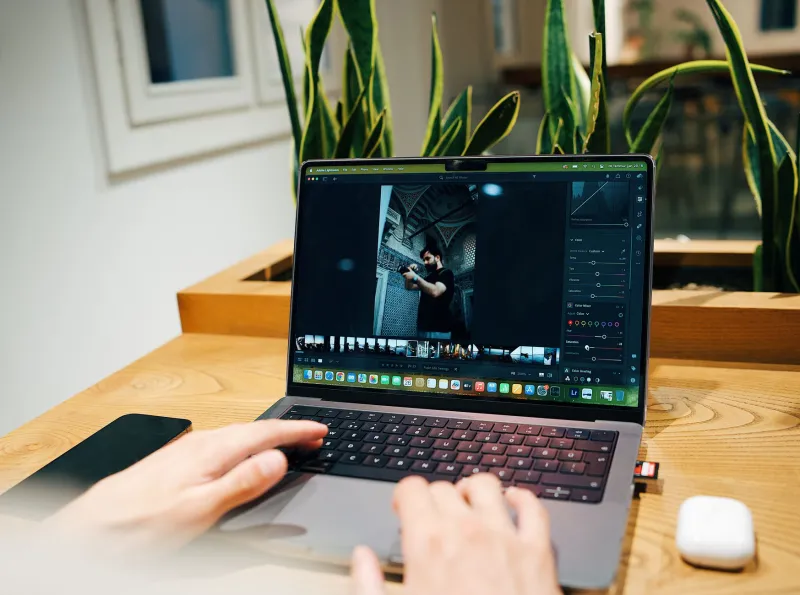
There's a quiet rebellion happening inside the editing apps on your phone. While tech companies are racing to roll out AI-powered tools that can retouch, recolor, and reimagine a photo in under three seconds, a surprisingly vocal community of content creators is doing the opposite — slowing down, taking control, and choosing to apply wave effects the old-fashioned way. By hand. With intention. One adjustment at a time.
It sounds counterintuitive in an era obsessed with speed and efficiency. But talk to enough photographers and digital artists about it, and a clear picture starts to emerge: the manual process isn't a workaround. For many, it's the whole point.
The AI Flood Nobody Asked For
Let's be real — AI editing tools are everywhere right now. From Adobe's generative fill features to the wave of one-tap filter apps promising "professional results in seconds," the market has flooded with automation. And on the surface, the pitch is compelling. Why spend twenty minutes tweaking a wave distortion effect when an algorithm can do a passable version in a fraction of the time?
The problem, as creators are discovering, is that passable isn't the same as personal.
"I tried a bunch of the AI tools when they first blew up," says Marcus, a freelance photographer based in Austin, Texas, who shoots music festivals and urban landscapes. "And yeah, they're impressive. But every time I used one, the result felt like it could've come from anyone. There was no fingerprint on it. No me in it."
That sentiment — the loss of creative fingerprint — keeps coming up in conversations with creators who've started pulling back from automated editing pipelines. The efficiency gain, they argue, comes at too high a cost to originality.
What Manual Wave Editing Actually Demands
Applying wave effects manually isn't a passive experience. It requires decisions — lots of them. How much amplitude? What frequency? Where does the distortion start and where does it fade? Should the wave flow horizontally, vertically, or at an angle that mirrors the subject's energy? Each choice shapes the final image in ways that are deeply specific to the creator making them.
That level of intentionality is exactly what draws artists like Priya, a digital content creator in Brooklyn who builds her Instagram presence around layered, textured wave edits of street photography. "When I'm working through a wave effect manually, I'm in a conversation with the photo," she explains. "The AI doesn't have that conversation. It just... answers a prompt. My edits have context because I know what I was feeling when I took the shot."
This idea of context is crucial. A wave effect applied thoughtfully to a photo taken at a crowded New Orleans street parade carries a completely different visual weight than the same technical distortion dropped onto a quiet mountain landscape. The human editor understands that difference instinctively. The algorithm doesn't — at least not yet.
Authenticity as a Competitive Advantage
Here's where things get strategically interesting. In a content landscape drowning in AI-generated sameness, manual craftsmanship is becoming a genuine differentiator. Audiences — especially younger ones — are increasingly good at spotting the telltale smoothness of an AI edit. And many of them don't love what they see.
Research on social media engagement consistently shows that audiences respond to content that feels real and considered. A wave edit that carries a creator's idiosyncratic touch, even if it's slightly imperfect, tends to generate stronger emotional responses than a technically flawless AI-generated result that feels generic.
"My engagement went up when I stopped using the AI presets," says Jordan, a lifestyle photographer in Chicago who switched back to manual wave editing after a three-month experiment with automated tools. "I think people could feel the difference, even if they couldn't articulate it. There's something about a handcrafted edit that reads as trustworthy."
That trust factor is no small thing when you're trying to build a loyal audience rather than just rack up fleeting impressions.
The Process Is the Product
Something else is happening here that goes beyond aesthetics or audience metrics. For many creators, the act of manually editing — the slow, tactile process of shaping an image — has become meaningful in itself. It's a form of creative practice, not just a means to an end.
Several creators describe their wave editing sessions almost meditatively. The focus required to dial in a specific distortion pattern, to watch how a slight frequency adjustment changes the entire mood of an image, creates a kind of flow state that automated tools simply can't replicate.
"I miss that when I use AI," admits Marcus. "There's no zone to get into. You type something, you wait, you get a result. It's fine. But it doesn't feel like making anything."
This distinction — between generating and making — is at the heart of why manual wave editing is resonating so strongly with a certain kind of creator. For them, the process carries as much value as the output.
AI Has Its Place — But So Does the Human Touch
None of this is to say AI editing tools are worthless. For high-volume commercial work, background cleanup, or batch processing, automation genuinely earns its keep. Most working creators use some combination of both approaches, reserving the manual wave work for the content that matters most to them.
The shift isn't about rejecting technology wholesale. It's about being deliberate — choosing the right tool for the right job, and recognizing that the right job for AI isn't always the one that requires the most creativity.
"I use AI for the boring stuff," Priya says with a laugh. "Batch resizing, noise reduction, whatever. But my actual creative edits? Those are mine. I want people to be able to look at my feed and see my hand in it."
Riding Your Own Wave
The broader cultural moment here is worth naming. At a time when AI is reshaping creative industries at a dizzying pace, there's something genuinely countercultural about insisting on doing things by hand. Manual wave editing has become, for many creators, a small but meaningful act of creative resistance — a declaration that their art is theirs, shaped by their choices, their moods, their specific vision of what an image should feel like.
That's a powerful thing to communicate to an audience. And it turns out, audiences are listening.
So while the AI tools keep getting faster and more sophisticated, don't be surprised if the most compelling content you see this year carries the unmistakable signature of a human hand — one that took its time, made its choices, and let the wave do exactly what it was meant to do.