Still Waters, Lasting Impact: The Real Reason Wave Aesthetics Never Go Out of Style
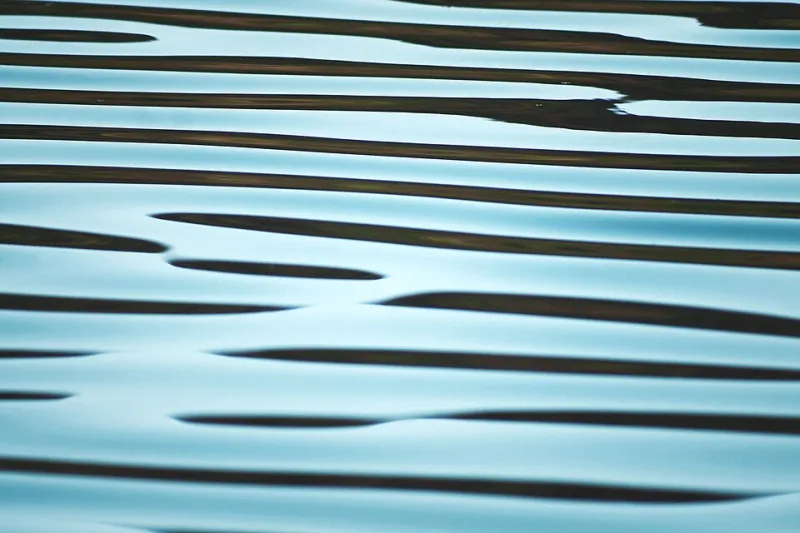
Photo: Daniel Rose daniel_rose, CC0, via Wikimedia Commons
Every few months, a new filter dominates social media and then vanishes just as fast. Remember when everyone's Instagram looked like a faded Polaroid from 1974? Or when that one high-contrast orange-and-teal grade took over every travel photo for about eight months before it started feeling like a parody of itself? Trends in photo editing move fast, and they age even faster.
Wave effects are different. They've been present in visual culture — digital and otherwise — for years, and they show no signs of becoming the aesthetic equivalent of a regrettable tattoo. That staying power isn't an accident. It's science, psychology, and something deeply human.
Why Most Filter Trends Have a Built-In Expiration Date
To understand why wave effects endure, it helps to understand why most trends don't.
Filter trends typically emerge from one of two places: a platform algorithm pushing a specific look, or a single influential creator whose style gets widely imitated. Both mechanisms have a ceiling. When an aesthetic becomes so common that it's the default, it stops functioning as a signal of creativity or identity — which is the whole reason people adopted it in the first place.
Design researchers call this "aesthetic saturation." Once a visual style reaches a certain penetration point in the culture, it loses its distinctiveness. It becomes wallpaper. And when that happens, the backlash is usually swift.
The other problem with algorithm-driven filter trends is that they're often tied to a specific technical moment — a particular app feature, a camera mode, a platform's native editing tools. When those tools evolve or disappear, the aesthetic that depended on them can start to look dated almost overnight.
Wave effects sidestep both of these failure modes, and the reason has everything to do with what they're actually depicting.
Water, Motion, and the Human Brain
Humans have a complicated and deeply wired relationship with water. Evolutionary psychologists have documented what's often called the "blue mind" phenomenon — the measurable psychological calm and focus that people experience near or around water. It's not metaphorical. Studies have found that exposure to aquatic imagery lowers cortisol levels and increases feelings of wellbeing.
Wave effects tap into that same neural circuitry. When you apply a wave distortion to an image, you're not just adding a visual flourish — you're activating associations that are baked into human perception at a pretty fundamental level. Fluidity, movement, rhythm, depth. These aren't learned aesthetic preferences. They're closer to instincts.
That's a very different foundation than, say, a vintage film grain filter. Nostalgia is powerful, but it's culturally and generationally specific. The emotional resonance of water is essentially universal.
The Motion Paradox: Why Stillness in Motion Works
Here's something interesting about wave effects from a perception standpoint: they introduce the suggestion of motion into a static image. And the human visual system is extraordinarily attuned to motion — far more so than to color, contrast, or detail.
Our peripheral vision, in particular, evolved specifically to detect movement. It's why a waving flag catches your eye before you consciously register what you're looking at. Wave effects exploit this same mechanism. Even in a still photo, the undulating lines and distorted forms trigger the motion-detection pathways in the brain, creating a sense of aliveness that flat images can't match.
This is also why wave edits tend to perform well in a scrolling feed environment. The brain flags them as "something moving" before the conscious mind has processed what it's actually seeing. That fraction-of-a-second advantage translates directly into scroll stops — which is, ultimately, the entire game on any social platform.
Symbolism That Scales Across Cultures
Beyond the neurological dimension, wave imagery carries a remarkable depth of symbolic meaning that transcends specific cultural contexts. Across traditions — from Japanese woodblock art to Native American design to contemporary Western graphic aesthetics — waves represent transformation, continuity, and the dynamic tension between chaos and order.
That's a lot of meaning to pack into a photo filter. But it's part of why wave aesthetics feel substantive in a way that purely decorative trends don't. There's something underneath the visual surface that resonates even when the viewer couldn't articulate exactly why.
For content creators, this depth is a strategic asset. An aesthetic that carries genuine symbolic weight tends to feel intentional rather than trendy. It communicates that the creator has a point of view, not just a filter.
Trend Cycles Can't Touch Something This Fluid
Let's look at this from a pure trend-cycle perspective. Most visual trends in social media follow a predictable arc: emergence, adoption, saturation, backlash, nostalgia. The whole cycle can play out in under a year.
Wave aesthetics have been in the culture long enough that they've already survived several of these cycles without being consumed by them. Part of the reason is their inherent variability. Unlike a specific color grade or a hard-edged graphic style, wave effects exist on a spectrum — from the barely perceptible to the aggressively surreal. That range means they can evolve alongside changing tastes without disappearing entirely.
A subtle wave distortion in 2021 looks different from a heavily layered wave composite in 2024, even though both are recognizably part of the same visual family. The aesthetic has room to grow and adapt. That's rare in a landscape where most trends are one-note by design.
What This Means for Creators and Brands
If you're thinking strategically about building a visual identity — whether you're a solo creator or a brand with a content team — the longevity question matters a lot. Investing time and creative energy into an aesthetic that's going to feel embarrassingly dated in eight months is a real cost.
Wave effects offer something genuinely valuable from a strategy standpoint: a visual language with deep psychological roots, broad symbolic resonance, and a demonstrated track record of cultural durability. That's not a guarantee of relevance forever, but it's about as close to a safe bet as the fast-moving world of digital aesthetics offers.
And honestly? There's something fitting about an effect inspired by water being the one that keeps flowing while everything else dries up. Waves don't stop because the trend cycle moved on. They just keep going.
That's kind of the whole point.