Hands On, Algorithm Off: The Young Photographers Reclaiming the Edit

Photo by Photo by Jakub Żerdzicki on Unsplash on Unsplash
For a generation that grew up swiping through augmented reality filters and one-tap AI beautification tools, you might expect Gen Z to be the most enthusiastic adopters of whatever algorithmic photo magic comes next. But spend any time in the photography communities on Reddit, Discord, or Tumblr right now, and you'll notice something that cuts against that assumption pretty sharply.
Young creators — particularly those between 18 and 25 — are actively pulling back from AI-generated effects and algorithmically optimized filters. In their place, they're reaching for something that requires more time, more intention, and more personal decision-making: hand-crafted wave edits and artistic distortion effects that couldn't be generated by a neural network because they weren't. A human made them, and that's exactly the point.
Why AI Filters Started to Feel Like a Trap
To understand the backlash, it helps to understand what AI beauty filters actually do at a psychological level. These tools are trained on enormous datasets of images that have already been deemed appealing — usually by engagement metrics, which are themselves shaped by existing biases about what faces and bodies and aesthetics should look like. The result is a filter that doesn't just touch up a photo. It nudges it toward a statistical average of "desirable."
For a lot of young creators, that process started to feel less like enhancement and more like erasure. The AI wasn't reflecting who they were — it was averaging them into someone more generically palatable. And once you see that clearly, it's hard to unsee.
"There's this moment where you look at your filtered photo and it looks great by every conventional standard, but it also looks like it could be anyone," says Jordan Meade, a 22-year-old photographer based in Nashville who's been building a following around intentional wave-edit aesthetics. "I'd rather have a photo that looks like me on a weird, creative day than one that looks like a stock image of a person."
This isn't just individual preference — it reflects a broader shift in how Gen Z thinks about digital identity. Where older millennials often used filters to present an idealized version of themselves, many younger creators are more interested in presenting a specific, idiosyncratic version. Authenticity, in this framing, isn't about showing the unfiltered real — it's about showing the intentionally chosen real.
What Makes Wave Edits Feel Different
From a purely technical standpoint, wave effects and creative distortion edits aren't "less edited" than AI filters. Some of them involve significantly more manual work. So why do they feel more authentic to the people using them?
The answer has a lot to do with legibility of intention. When you look at a photo with a wave distortion effect, you can see the human decision embedded in it. Someone chose the direction of the wave, the intensity, the color treatment. Those choices communicate something about perspective and taste in a way that an AI-smoothed complexion simply doesn't. The edit is visible, and its visibility is the point.
There's a concept in design called "the honest material" — the idea that the most satisfying objects are ones where you can understand how they were made just by looking at them. Wave edits function similarly. They wear their construction openly, and that openness reads as trustworthy in a visual landscape that's increasingly saturated with outputs that hide their process entirely.
The Aesthetic Trends Emerging From the Community
Within wave-editing communities right now, a few distinct visual directions are gaining real momentum among young creators:
Chromatic drift: Wave effects that separate color channels slightly, creating a subtle prismatic blur along the edges of subjects. It references analog photography errors in a way that feels nostalgic without being retro.
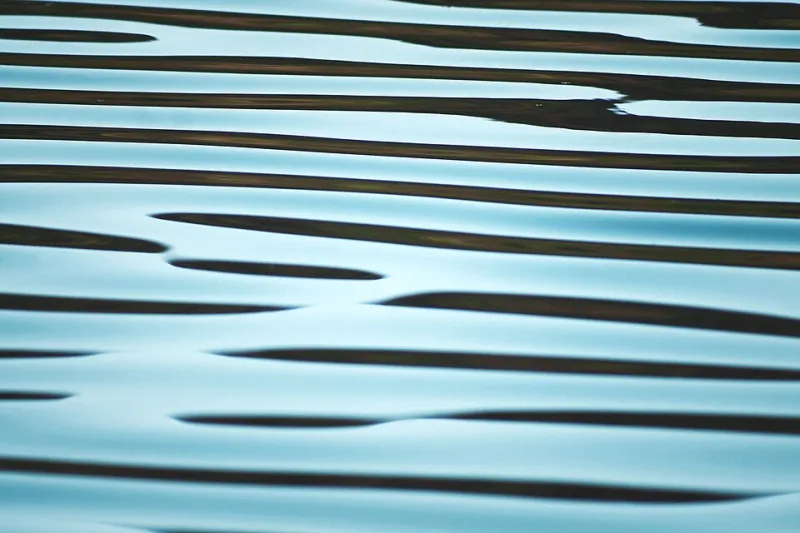
Liquid portraiture: Applying gentle wave distortion directly to portrait photos to create a sense of movement and emotional fluidity. Unlike AI beauty filters, this approach doesn't smooth or idealize — it adds complexity.
Architectural ripple: Using wave effects on environmental and urban photography to make cityscapes and interior spaces feel slightly dreamlike. This aesthetic is picking up significant steam in the architecture and travel photography corners of Instagram.
Monochrome wave: High-contrast black-and-white photography treated with bold wave overlays. The effect is graphic and striking, and it's showing up everywhere from personal portfolios to zine covers.
What these trends share is a resistance to the frictionless, frictionless quality of AI-generated effects. They all involve something that looks like it took effort — because it did.
The Broader Conversation About Digital Authenticity
This movement doesn't exist in a vacuum. It's happening alongside wider cultural conversations about AI-generated art, deepfakes, and the erosion of trust in digital imagery generally. As audiences become increasingly aware that what they see online may have been substantially generated or altered by systems they can't see or interrogate, there's growing appetite for signals of human involvement.
Wave edits provide one of those signals. They're a way of saying: a person did this, made these choices, spent this time. In an era when that kind of assurance is becoming harder to take for granted, it carries real weight.
For platforms and creators alike, understanding this dynamic matters. The next wave — pun fully intended — of visual culture online may be less about which AI tool produces the most impressive results and more about which editing choices most convincingly communicate human presence. Gen Z photographers seem to have figured that out ahead of the curve.
And honestly? The photos they're making in the process are pretty stunning.