The Ripple Effect on Your Mind: What Wave Editing Really Does to Anxiety
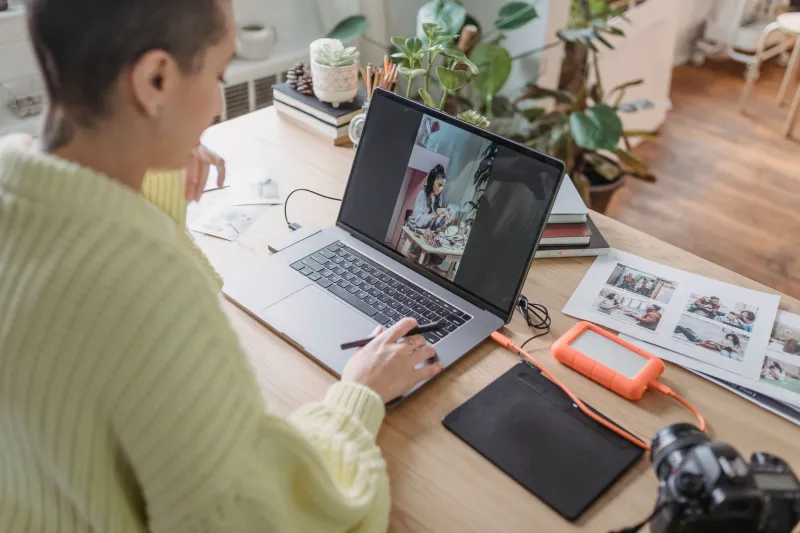
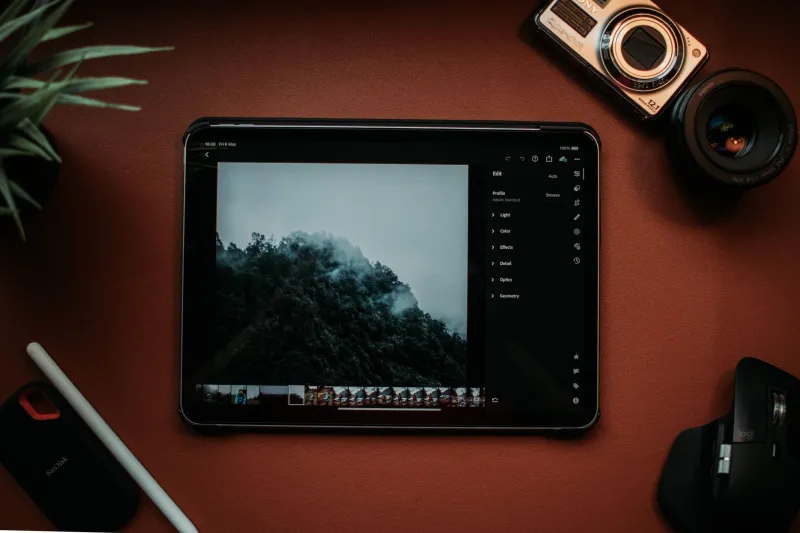
It usually starts around 10 p.m. The notifications have quieted down, the group chats have gone dark, and instead of doomscrolling or staring at the ceiling, you open up WaveMyPic and start editing. Maybe it's a photo from last weekend — a sunset you almost didn't take, a coffee cup catching the morning light. You pull up a wave filter, adjust the intensity, nudge the distortion just a little to the left. Suddenly, forty-five minutes have disappeared.
For a growing number of users, that's not procrastination. That's therapy — or at least, it feels like it.
But is the meditative pull of wave editing a genuine mental health tool, or a really convincing distraction? The answer, according to researchers and clinicians, is genuinely complicated.
Why Your Brain Loves the Edit
There's actual neuroscience underneath the calming feeling that comes with creative editing. Dr. Renata Ochoa, a licensed psychologist based in Austin, Texas, explains it this way: "When someone engages in a repetitive, goal-oriented creative task — adjusting colors, applying effects, refining an image — they're activating the brain's default mode network in a focused way. It's similar to what happens during mindfulness meditation. The mind has something concrete to do, which quiets the ambient noise of anxious thought."
Wave editing, specifically, adds another layer. The visual nature of manipulating flowing, fluid forms — the soft distortion of a wave effect moving across an image — may tap into what psychologists call the "blue mind" phenomenon, a state of calm associated with water imagery. Even simulated water movement, it turns out, can trigger a mild relaxation response.
For users dealing with generalized anxiety disorder or chronic stress, that's not nothing.
Control Is the Point
Ask regular editors why they keep coming back, and one word comes up over and over: control.
Jamie, a 28-year-old graphic designer in Chicago, describes her editing sessions as "the one part of my day where I'm actually in charge." She edits photos almost every evening, often spending an hour or more refining a single image. "My job is chaos, my commute is chaos, my inbox is chaos. But when I'm editing, I decide what looks good. I decide when it's done. Nobody else gets a vote."
That sense of autonomy is psychologically significant. Research on anxiety consistently shows that perceived lack of control is one of its core triggers. When people feel powerless — over their schedules, their relationships, their futures — anxiety spikes. Creative activities that restore a sense of agency can genuinely counteract that response.
Dr. Marcus Thill, a behavioral therapist in Seattle, has started asking anxious clients about their hobbies with more specificity than he used to. "I had a patient who described editing photos as the only time she didn't feel like she was bracing for something. That's a meaningful clinical signal. She wasn't avoiding her anxiety — she was regulating it."
The Dopamine Loop Nobody's Talking About
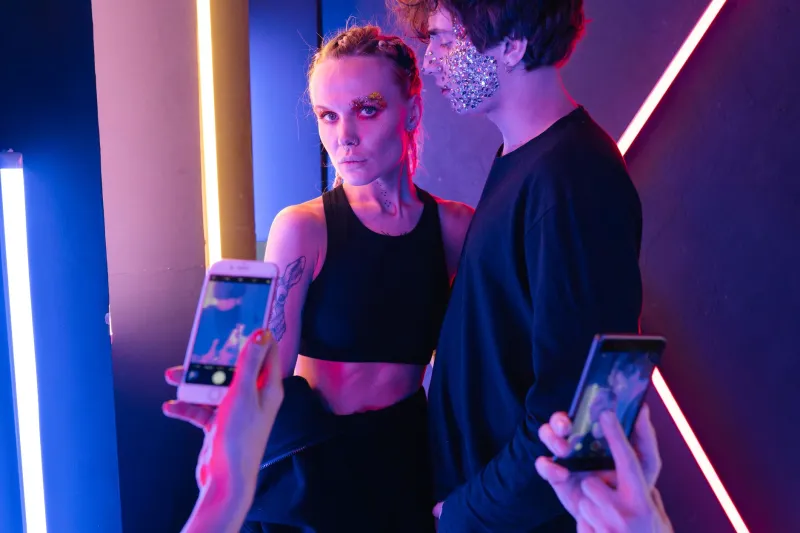
Here's where things get more nuanced. Editing a photo is one thing. Sharing it — and watching the likes roll in — is something else entirely.
The creative process and the social validation loop are deeply intertwined for most users, and that combination creates a feedback cycle that isn't always healthy. The satisfaction of a well-executed wave edit is real. But if that satisfaction becomes contingent on external approval — on the heart count, the comment section, the follower bump — the psychological benefits start to erode.
"There's a meaningful difference between intrinsic creative satisfaction and extrinsic validation-seeking," Dr. Ochoa notes. "One builds resilience. The other builds dependency. A lot of people are doing both simultaneously and don't realize it."
Some users describe a particular kind of post-share anxiety — a low-grade dread that sets in after they've posted an edited image and the algorithm hasn't rewarded it the way they hoped. Marcus, a 34-year-old teacher in Atlanta, calls it "the drop." "I'll spend an hour getting an edit exactly right, feel really good about it, post it — and then if it doesn't get traction, I feel worse than I did before I started. Like I did all that work for nothing."
That's not a wave editing problem, exactly. It's a social media problem that wave editing gets tangled up in.
Perfectionism: The Hidden Variable
Anxiety and perfectionism are frequent travel companions, and photo editing can become a staging ground for both. The granular control that tools like WaveMyPic offer — the ability to adjust opacity, tweak distortion curves, layer multiple effects — is genuinely empowering. It's also a potential rabbit hole for anyone whose anxiety expresses itself as "this isn't quite right yet."
Dr. Thill sees this pattern regularly. "For some clients, editing becomes a way to avoid finishing — and by extension, avoid judgment. If you never post it, nobody can criticize it. The editing session becomes a form of safety behavior."
The line between healthy creative engagement and anxious avoidance is thin, and it shifts depending on the person. One user's meditative flow state is another user's compulsive spiral.
So — Is It Actually Good for You?
The honest answer is: it depends on why you're doing it and what you do after.
Used intentionally — as a way to decompress, express something creative, or simply give your nervous system a focused task — wave editing genuinely checks out as a low-stakes anxiety management tool. It's accessible, it's affordable, and for a lot of people, it works.
The problems tend to emerge when editing becomes a substitute for addressing anxiety directly, or when the sharing component hijacks the therapeutic value of the creative act itself.
Dr. Ochoa's advice is straightforward: "Pay attention to how you feel before, during, and after. If the editing itself feels good but the posting makes you anxious, that's information. Maybe you edit for yourself sometimes. Maybe the wave effect on that photo is just for you."
That's a concept worth sitting with. Not every ripple needs an audience.
Finding Your Own Frequency
WaveMyPic was built around the idea that transforming a photo should feel like something — not just a technical task, but a creative experience. For a lot of users, it clearly does feel like something. Something calming, something satisfying, something that carves out a small pocket of order in an otherwise noisy day.
If wave editing is part of your mental health toolkit, you're in good company. Just keep checking in with yourself about what the editing is doing for you — and whether the sharing part is adding to that or quietly taking something away.
The wave is yours to shape. How you ride it is up to you.